Hairstyle Try On: AI Haircut
- 4.2
- Rating
- 10.00K
- Installs
- Free
- Price
 Analysis by App-foxy
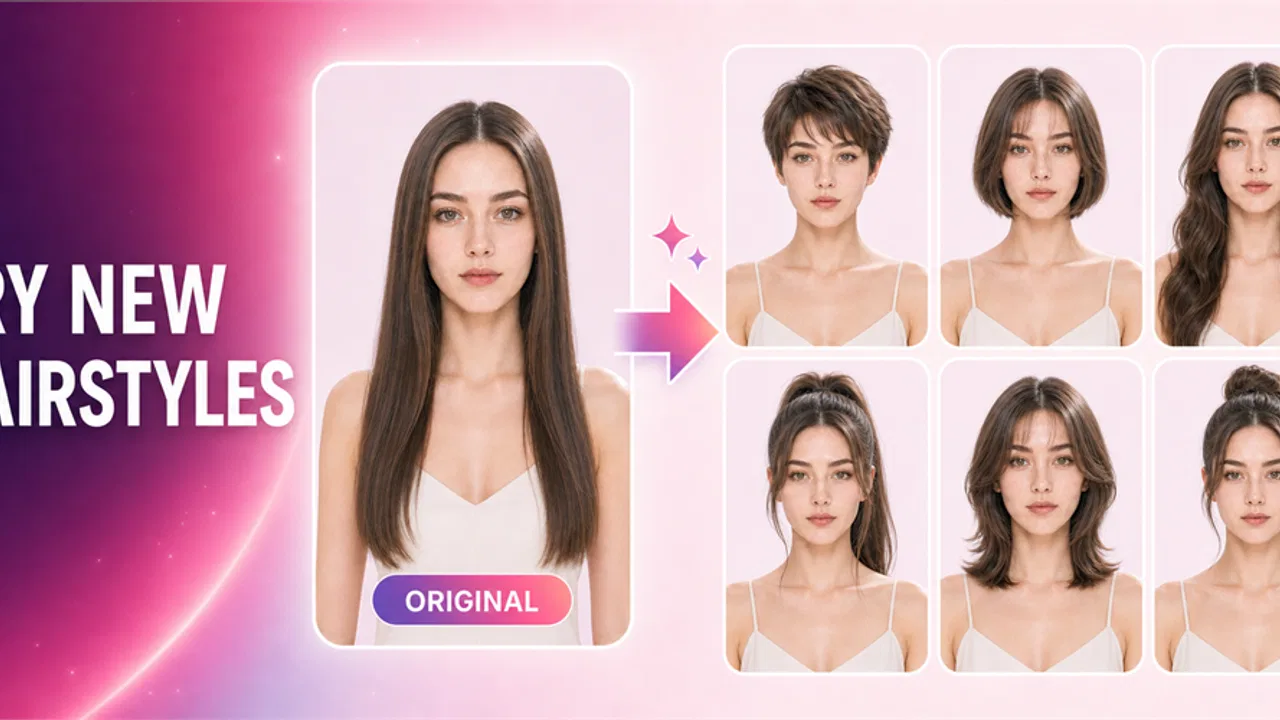
I tried AI Hairstyle Try On as a practical beauty app rather than treating it like a simple collection of hairstyle pictures. The basic idea is easy to understand: start with a selfie, test a different cut or color, and use the result to think through a possible change before making a salon appointment. In my experience, that makes it most useful as a visual planning tool, not as a promise of exactly what your hair will look like in real life.
The app comes from SuLan and sits in the beauty category. It is free to install, marked for Everyone, and has passed the early discovery stage with over ten thousand installs. Its average rating is currently zero, so I would not use that number as a meaningful verdict yet. The current version is 1.6.6.0, and it runs on Android 8.0 or later. That combination makes it accessible to many older phones, although the quality of the final image will still depend heavily on the selfie you provide.
From an ordinary selfie to a more useful hair decision
I focus here on the step between having a selfie and using a preview to make a sensible choice: what to compare, what to keep constant, and how to turn a visual preference into a question worth asking a stylist. Once that decision-making workflow is clear, the next section looks at how I’d approach the app’s pace and repeated use without expecting every preview to settle the matter.
You May Also Like

 AccuWeather: Weather Radar
AccuWeather Review: A Quick, Clear Forecast for Everyday Decisions
For everyday plans, the best forecast is the one you can understand quickly. AccuWeather makes rain timing, radar, and local conditions easy to act on, with a few trade-offs.

 Hill Climb Racing
Why Hill Climb Racing Still Turns Crashes Into One More Run
A tiny car, a bumpy hill and one more upgrade: Hill Climb Racing keeps resurfacing because its simple chaos makes every near-miss feel personal.

 AliExpress - Shopping App
AliExpress Makes Global Shopping Feel Personal, but Shoppers Bear the Risk
AliExpress turns a global marketplace into a pocket-sized discovery engine. Its reach is useful, its shopping loop compelling, and its trade-offs easy to miss.

 Lords Mobile: Kingdom Wars
Lords Mobile Is a Kingdom-Building Routine, Not a Quick Match
A case-by-case verdict on the building, battles, device demands, and social commitments that make Lords Mobile rewarding for some players and exhausting for others.

 PDF Scanner app - TapScanner
TapScanner Makes Paperwork Easier to Capture, Check, and Share
TapScanner makes scanning with a phone feel less like a rescue operation and more like a dependable step in getting work done. Its capture tools are useful, though not flawless.

 Block Blast!
 Shows How Much a Puzzle Game Can Leave Out
A quiet grid game shows why puzzle players increasingly value instant clarity, repeatable skill and low-pressure play—and where the genre still needs to catch up.
More From Our News Desk
View All News


Start with the right photo, not the most flattering one
The first important choice happens before the app has a chance to do anything: selecting the input image. A heavily angled selfie, a face partly hidden by sunglasses, or a photo with strong shadows can make a hairstyle preview less helpful. I found that a straightforward front-facing image is a better starting point than a dramatic portrait. The goal is not to create the prettiest social post; it is to give the app a clear view of the face and hairline.
That distinction matters because a virtual hairstyle has to sit on top of the original image. If the source photo already hides the forehead, ears, or sides of the head, the preview has less visual information to work with. I recommend using a recent photo with a neutral expression and keeping the head fairly straight. This is one of the less obvious ways to improve the experience: a realistic reference image is more valuable than a polished one.
There is also a useful everyday scenario here. Imagine that I am considering a shorter cut before a weekend appointment. I can take a normal indoor selfie, try a few shapes, and save the options that make me pause for the right reasons. That gives me something concrete to discuss with a stylist instead of saying only that I want “something different.” The app does not replace professional advice, but it can make the first conversation less vague.
Move through styles with a specific question in mind
It is tempting to tap through every available look without a plan. That can be entertaining, but it is a weak way to make a decision. I get more value by testing one variable at a time. For example, I might keep a similar length while comparing a warmer and cooler color, then return to the original shade and compare a shorter silhouette. This makes it easier to notice whether I actually prefer the cut or whether the color is doing all the work.
The app is designed around trying hairstyles, haircuts, and hair colors, so the natural workflow is exploratory. I would begin with a look close to my current hair, then move gradually toward more ambitious changes. Starting with a familiar shape provides a visual baseline. Without that baseline, it is easy to reject a style simply because the whole image feels unfamiliar.
One practical tip is to judge the preview at normal size as well as zoomed in. Enlarging an image can make small edges or blending details seem more important than they would be in everyday conversation. Viewing the result as I would normally see a phone photo gives a better sense of whether the overall impression works. I also compare several outputs using the same selfie, because changing the source image at the same time makes the comparison much less reliable.
Separate inspiration from a salon-ready specification
The best handoff from the app is not a screenshot accompanied by “make me look like this exactly.” It is a clearer description of what I like: the approximate length, the direction of the fringe, the amount of volume, or the general color family. AI Hairstyle Try On can help me discover those preferences, but the image should be treated as a conversation starter.
This is especially important for color. A digital preview may show the mood of a shade, while a stylist has to consider the starting color, previous treatments, hair condition, and the process needed to reach the result. I would bring the preview together with a plain-language explanation of what I want to preserve. For instance, I might say that I like the brighter appearance around the face but do not want a dramatic overall change. That is more useful than relying on the image alone.
The same approach works for haircuts. A preview can suggest that I prefer a cleaner outline or more movement, but it cannot by itself explain how the style will behave after washing, how much daily styling it needs, or whether my hair naturally falls in the same direction. Those questions belong in the next handoff, between the screen and the person doing the haircut.
Understand what the generated image can and cannot promise
The word “realistic” in the app’s positioning is helpful when it means the preview is intended to look believable, but I would still keep expectations grounded. A digital result is an approximation layered over one particular pose, lighting setup, and expression. It does not show how a cut moves when I walk, how it looks from behind, or how much effort is required to recreate it each morning.
That limitation does not make the app pointless. It changes the question I ask of it. Instead of asking, “Will I look exactly like this?” I ask, “Do I like the direction this image suggests?” That question produces better decisions. It also protects against one of the common mistakes in virtual try-on tools: treating one attractive render as proof that a major transformation will suit every situation.
Where the free entry point meets optional spending
The app is free to use as an installation, while optional in-app purchases range from $4.99 to $38.99 per item. That means I would explore the basic workflow before spending anything. A sensible approach is to decide whether the image quality, style selection, and ease of comparing results are already useful for my purpose. If I only need one idea to take to a stylist, paying for more options may not be necessary.
On the other hand, someone preparing for a significant change may find extra choices more valuable than someone who simply wants a quick bit of entertainment. The trade-off is straightforward: the more seriously I use the app for planning, the more I should judge any purchase by whether it improves a real decision. I would avoid buying simply because I had already spent time experimenting. That is a small but important safeguard with any free beauty app that offers optional paid items.
Phone compatibility and the small points of friction
Support for Android 8.0 and later gives the app a reasonably broad starting point, including devices that are not new. Still, compatible software does not guarantee an equally smooth experience on every phone. A newer camera and display may make it easier to inspect a preview, while an older device may make image handling feel less immediate. I would keep the original selfie available and avoid judging a result only from a dim screen.
The handoff from camera roll to generated preview is also where patience matters. A user has to choose an image that works for the app, wait for the transformation, and then decide whether the outcome is worth comparing with another option. If that process feels repetitive, a small batch of carefully chosen styles is better than endlessly tapping through possibilities. The app is more useful when I approach it with a shortlist rather than expecting it to make the decision for me.
How it compares with ordinary alternatives
The usual alternative is searching image results, social posts, or salon galleries. Those sources are better for seeing professional photography, different angles, texture, and finished work on many people. Their weakness is personal relevance: a style may look excellent on someone else while giving me little sense of how its proportions might relate to my own face.
AI Hairstyle Try On reverses that balance. It offers a more personal visual experiment, but the result is tied to a single selfie and should not be mistaken for a complete consultation. I would use a gallery or stylist portfolio to learn what a cut looks like in real conditions, then use this app to narrow down which direction feels closest to me. Used together, those tools answer different questions instead of competing directly.
A manual photo editor is another alternative. It may provide more control over cropping, color adjustment, and presentation, but it usually demands more effort and editing skill. This app is more approachable for the specific task of imagining a new hairstyle. The trade-off is that convenience can come with less control over the exact details. People who enjoy meticulous editing may prefer a general-purpose tool, while people who want a quick personal preview will likely appreciate the focused workflow here.
Who will get the most from this workflow
I think the app is a good fit for someone who is undecided between a few hair directions, wants a visual aid before booking an appointment, or enjoys experimenting without immediately changing their appearance. It can also help when two people are trying to agree on a general idea. Showing a preview can make a conversation with a friend or stylist more specific than describing a haircut with uncertain terminology.
It is less suitable for anyone expecting exact professional simulation. If I need to know how a style will look from every angle, how it will behave with my natural texture, or what maintenance it demands, I need a stylist and real-world references. I would also skip relying on it for a high-stakes transformation based on one generated image. The app can reduce uncertainty, but it cannot remove it.
What I would do before making a final choice
My preferred workflow is to keep the process deliberately small. I choose one clear selfie, test a familiar look first, compare a few changes one at a time, and save only the results that communicate something useful. Then I look at real examples of similar cuts and ask a stylist about maintenance, suitability, and the steps needed to achieve the color. This prevents the app from becoming an endless gallery of attractive but impractical ideas.
I would also revisit the original image before deciding. A preview can make a change seem appealing because it is new, not because it fits my routine. If I rarely style my hair, a look that requires daily shaping may be a poor choice even when the image is convincing. The most valuable insight from the app is often not which style looks best, but which type of change I am genuinely willing to maintain.
My final take after following the full path
AI Hairstyle Try On succeeds when I use it as a bridge between curiosity and a more informed beauty decision. Starting with a sensible selfie, comparing changes carefully, and handing the strongest ideas to a stylist creates a useful path from input to outcome. The app’s focus on haircuts, hairstyles, and colors makes it more direct than a general photo editor, and the free installation makes it easy to test before considering optional purchases.
Its weak point is the same feature that makes it appealing: the result is visual and immediate, so it can feel more certain than it really is. Hair texture, lighting, movement, maintenance, and professional technique still matter. I would recommend it to a friend who wants inspiration or needs help explaining a possible change, while warning them not to treat the preview as a guarantee.
My recommendation is to use it for narrowing the conversation, not closing it. If you approach each preview as a question rather than a promise, SuLan’s beauty app can turn a vague urge for a new look into a clearer, more practical plan. That is a worthwhile role for a free tool, especially when the final decision remains grounded in real hair, real upkeep, and advice from someone who can work with both.
FAQs for Hairstyle Try On: AI Haircut
01What features does the AI Hairstyle Try On app offer?
The AI Hairstyle Try On app provides a wide range of features that allow users to experiment with different hairstyles and colors using augmented reality. It offers a virtual mirror to see changes in real-time, a vast hairstyle library, and the ability to save and share your new looks. This makes it easy to envision different styles without any commitment.
02How accurate are the hairstyle simulations in the app?
The app uses advanced AI technology to provide highly realistic hairstyle simulations. It analyzes facial features and adjusts styles accordingly, ensuring that the virtual hairstyles fit naturally. While it strives for accuracy, the final look may vary slightly depending on lighting and camera quality.
03Is the AI Hairstyle Try On app free to use?
The app is free to download and offers a selection of basic features at no cost. However, it includes in-app purchases for premium hairstyles, advanced editing tools, and ad-free experiences. Users can choose to upgrade for a more comprehensive styling experience.
04Can I use the app on both Android and iOS devices?
Yes, the AI Hairstyle Try On app is available for both Android and iOS platforms. It is optimized for smartphones and tablets, ensuring a seamless experience across devices. Users can easily download it from Google Play Store or Apple App Store.
05How does the app protect user privacy?
User privacy is a priority for the AI Hairstyle Try On app. It adheres to strict privacy policies, ensuring that any photos or data uploaded remain confidential. The app does not store personal images or share them without user consent, providing a secure environment for all users.
Pros
- Easy to use with a user-friendly interface.
- Offers a wide variety of hairstyle options.
- Real-time hair simulation for better results.
- Works well on both Android and iOS devices.
- Regular updates with new styles.
Cons
- Requires a stable internet connection.
- Some styles may not suit all face shapes.
- Limited free options; in-app purchases needed.
- Occasional app crashes reported by users.
- Requires access to your photo library.

Hairstyle Try On: AI Haircut
Gallery